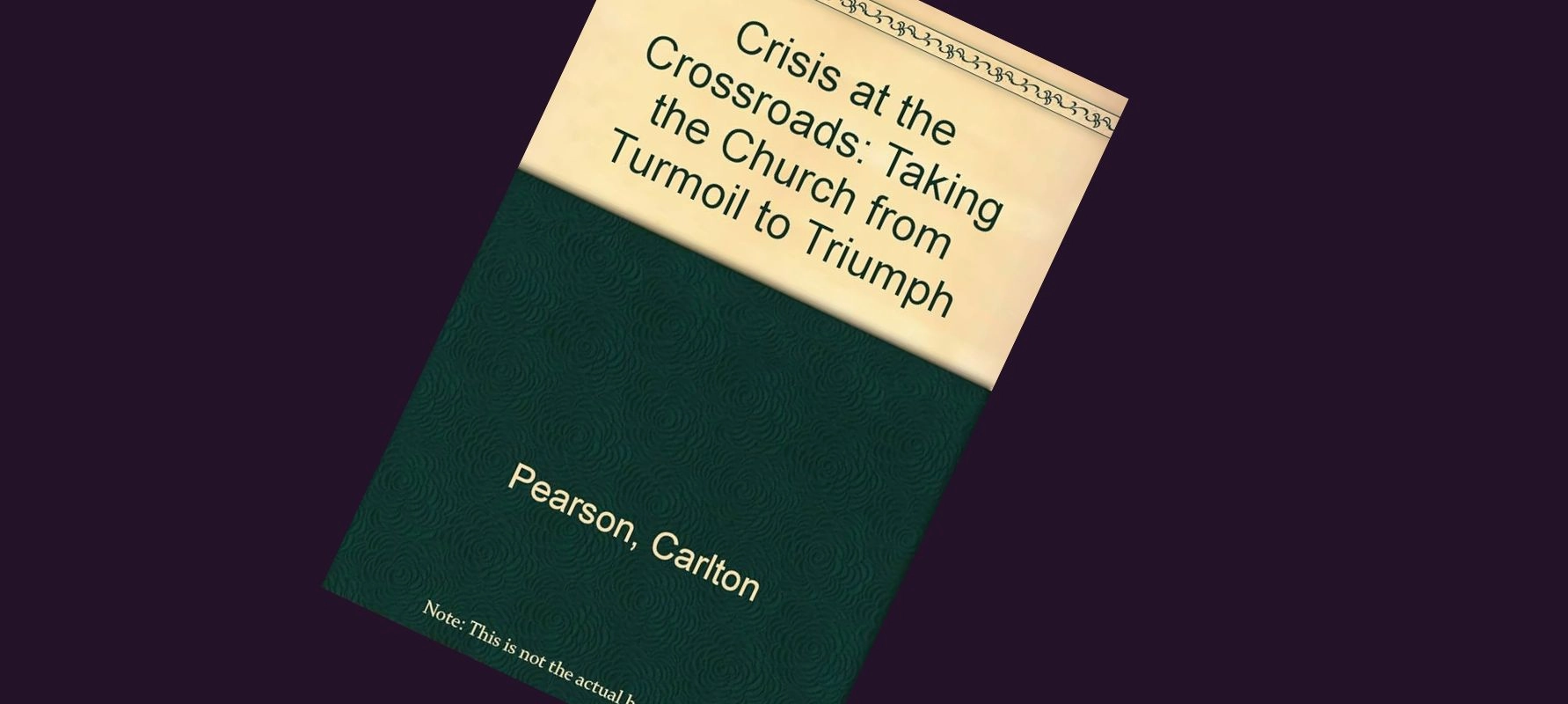

Crisis at the Crossroads
Author: Carlton D. Pearson
Genre: Religion / Christian Leadership / Church Growth
Publisher: Harrison House (or Honor Books)
Publication Year: 1989
Pages: 239
Format: Paperback
Language: English
ISBN: 978-0892745524
Rating: ★★★★☆
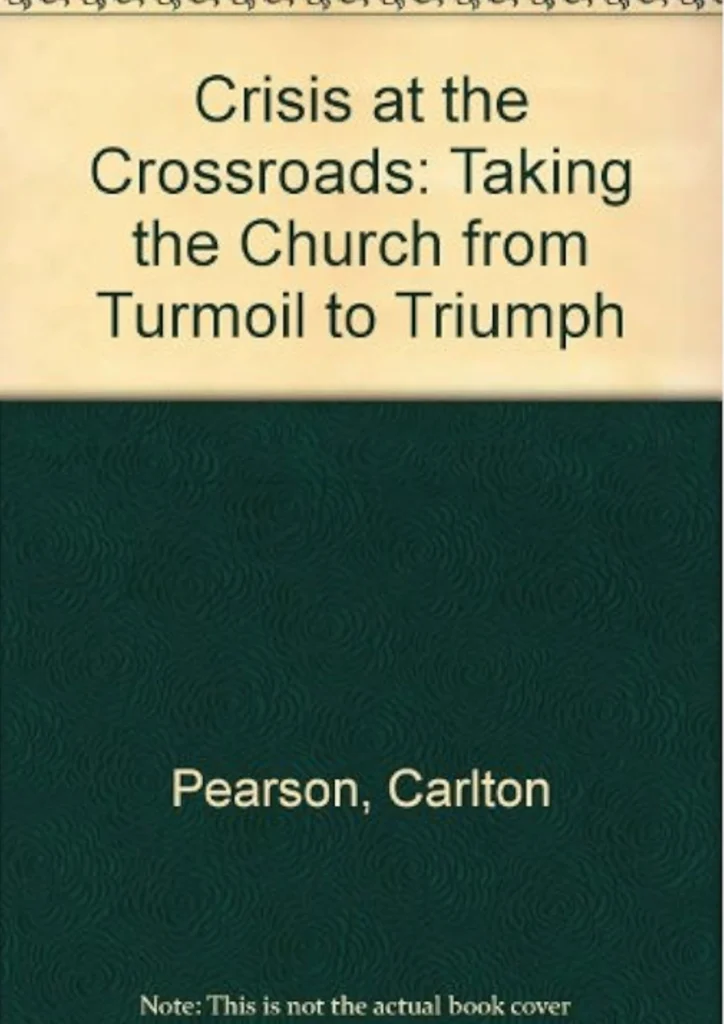
Crisis at the Crossroads Video
Crisis at the Crossroads: Publication Details
Release and Edition Information
The publication “Crisis at the Crossroads: Taking the Church from Turmoil to Triumph” was first released in 1997. Its release was timely, and it proved to be a force to be reckoned with in the discussion of the late 20th-century American church. Published by PneumaLife Publishing, the book captured the mind of Carlton Pearson at the height of his authority in the Pentecostal and Charismatic communities. It captures his thought as a well-known megachurch pastor and an esteemed leader, years prior to the theological concerns that would go on to redefine his life’s work. The book is a primary source document, presenting us with an open view of the problems and proposed solutions for church growth and relevance at that specific moment.
Type: Book on Church Leadership and Theology
The book is unapologetically a book on Christian church leadership, ecclesiology (church theology), and practical theology. It is not merely a memoir or a devotional book; it is a strategic manual and an urgency call to action. Pearson writes as an insider to pastors, ministry leaders, and serious church members, a diagnosis of the “ailments” he perceived to be present in the church today and a prescription for a step-by-step, achievable cure. The book blends theological reflection with practical, experience-driven advice on matters ranging from worship and organizational design to outreach and racial reconciliation, and it is therefore an authoritative guide to leaders wishing to build thriving and productive ministries.
By Carlton D. Pearson
The author, Carlton D. Pearson (1953-2023), was a giant of American Christianity well before he was renowned for his ensuing universalist theology. While writing Crisis at the Crossroads, he served as senior pastor and founder of the thriving Higher Dimensions Family Church in Tulsa, a multicultural 5,000-member church. He was a Grammy Award-winning gospel singer, a regular presence on Christian television, and host of the gargantuan yearly Azusa Conference. The book, accordingly, is written from a place of enormity of authority and seeming prosperity. It is by a man who was seen to have built the very paradigm of successful, modern, multicultural church, and in this book, he shares the principles and methods that he believed were the keys to attaining that success.
The Student and Scholar’s Guide to Crisis at the Crossroads
Relevance for Students of Theology and Leadership
To students of theology, the book is a valuable piece of historical testimony. It provides us with a window into the issues of the American Charismatic movement at the close of the 1990s, namely its striving after traditionality combined with relevance. More specifically, though, it is a foundation upon which to judge Pearson’s own theological evolution. By observing the orthodox, institution-bound answers he provides here, students can gain a better sense for the radicalism of his later deconstruction.
For students of leadership and organizational studies, the book is a compelling case study of change management within a large, non-profit, values-based organization. Pearson’s analysis of institutional “turmoil” and his remedy for achieving “triumph” are lessons in vision casting, stakeholder management, and shepherding an entrenched institution through a profound cultural shift that are still relevant today. His passionate advocacy for diversity and inclusion as a critical leadership value was quintessentially ahead of its time.
Key Concepts for Critical Analysis
- Institutional Stagnation vs. The Prophetic Voice: Pearson states the book’s primary “crisis” as a tug-of-war between the church’s tendency to cling to warm and fuzzy traditions and the “prophetic” imperative to transform and engage the current culture.
- The Theology of Relevance: The book rests on a theologically presumed knowledge that cultural relevance must be the first line of evangelism strategy. This merits critical evaluation of its limits and strengths.
- Racial Reconciliation as a Theological Task: Pearson’s firm argument that a racially divided church is a theological failure remains one of its most enduring themes.
- Charismatic Ecclesiology: A primer to the organizational form, values, and goals of a late 20th-century Charismatic megachurch, from leadership models to worship style.
Unpacking the Crisis Message at the Crossroads
The Principal Thesis of the Book on Church Reformation
The principal thesis of Crisis at the Crossroads is that today’s Christian church in America is faced with a radical choice moment that will determine its future vitality. Pearson states that the church will either be a victim of the “turmoil” of internal conflict, cultural un-relevance, and stodgy traditionalism and shrink, or it can initiate a process of brave, Spirit-directed change to achieve a new level of “triumph” and impact. His basic thesis is that change will have to be the result of an intentional and deliberate move away from old-fashioned practices and attitudes. He believes the church must go out of its way to destroy its racial and denominational divisions, adopt contemporary communication and worship techniques, and move away from its inward-directed methods to an overall involvement in the true needs of its people in the world.
A Chapter-by-Chapter Overview
- Chapters 1-3: Diagnosing the Crisis: Pearson identifies racism and stagnant worship as primary “symptoms” of crisis, condemning racial segregation and legalistic practices.
- Chapters 4-6: The Call for a New Wineskin: Argues biblically for adaptability and new forms of worship and organization to align with God’s work.
- Chapters 7-9: The Blueprint for Triumph: Offers practical strategies for integration, contemporary worship, and holistic community ministry.
- Chapters 10-12: A Vision for the Future: Sketches the church of tomorrow—multicultural, socially engaged, and courageous enough to embrace change.
A Critical Analysis of Crisis at the Crossroads
Book Analysis of the Solutions Recommended
Pearson’s solutions offered in Crisis at the Crossroads are an encouraging blend of the visionary and the practical. His strongest and most durable recommendation is his comprehensive road map to racial reconciliation. In an age when most churches were still relatively homogenous, his determination to have planned, top-down integration was both visionary and daring, and his advice is still remarkably relevant. Similarly, his determination that the church had no right to offer the world anything less than an excellent product—by way of cultural viability and ministry quality—was the very linchpin of the megachurch phenomenon’s success.
A more critical analysis, however, discovers the book’s limitations quite largely in the hindsight. The solutions, however revolutionary in their time, function completely within the new paradigm of Charismatic theology and attractional church growth. The book is a blueprint for building a bigger, more efficient, more streamlined form of the contemporary church; it is not yet critiquing the assumptions beneath the system. His “victory” vision at this stage is still largely in institutional terms of achievement—larger churches, greater power, and more influential programs. This makes the book valuable as a historical piece, because it is the pinnacle of his thinking before he began to feel that the whole system needed to be torn down rather than rewritten.
Who is the Main Audience for This Book?
The book’s target group is clearly Christian church workers, pastors, and dedicated lay leaders, particularly within the Charismatic and Pentecostal traditions. Pearson is speaking to his co-laborers—people who are already extremely dedicated to the local church’s health and life. Insider terminology is employed, assuming a certain cluster of shared theological presumptions and a common desire for institutional growth and effectiveness. While the principles themselves can be of general interest, the examples, Bible arguments, and “church-speak” confirm that this is a book by and for those already in ministry leadership or aspiring to be.
Final Thoughts on Crisis at the Crossroads
Summary of Key Strategies and Takeaways
- Act on Diversity: Leaders must move beyond words and implement practical strategies for multicultural congregations and leadership.
- Embracing Excellence and Relevance: The church must present a compelling, culturally attuned message through music, art, and communication.
- From Inward to Outward: A church must serve and transform its community, not remain a closed spiritual club.
- Be Open and Spirit-Guided: Churches must remain adaptable and sensitive to the Spirit, abandoning rigid traditionalism.
The last lesson is that passivity is the enemy of progress. Pearson’s invitation is that church leaders must be bold, aggressive, and willing to pay the price of change to prevent drifting toward decline.
Final Evaluation of the Book’s Influence
The influence of Crisis at the Crossroads is best understood in two ways. Then it was a valued and powerful handbook that articulated many of the underlying values that would drive the most successful parts of the American church for the next decade. It authorized leaders to be creative and made a strong theological argument in favor of racial integration.
Its lasting legacy, however, is as a crucial element of the Carlton Pearson tale. The book is an emotional “before” picture, an accurate portrait of the world itself he would come to feel that he was honor-bound to leave behind. It is a monument to his skills as a prophetic leader and a refurbisher, but also to the orthodox, institutional church he used to champion. This is the reason the book is perhaps even more fascinating to read now than it was when first published. It is a salutary reminder that even the most heartfelt appeals to reform can sometimes precede a revolution.