
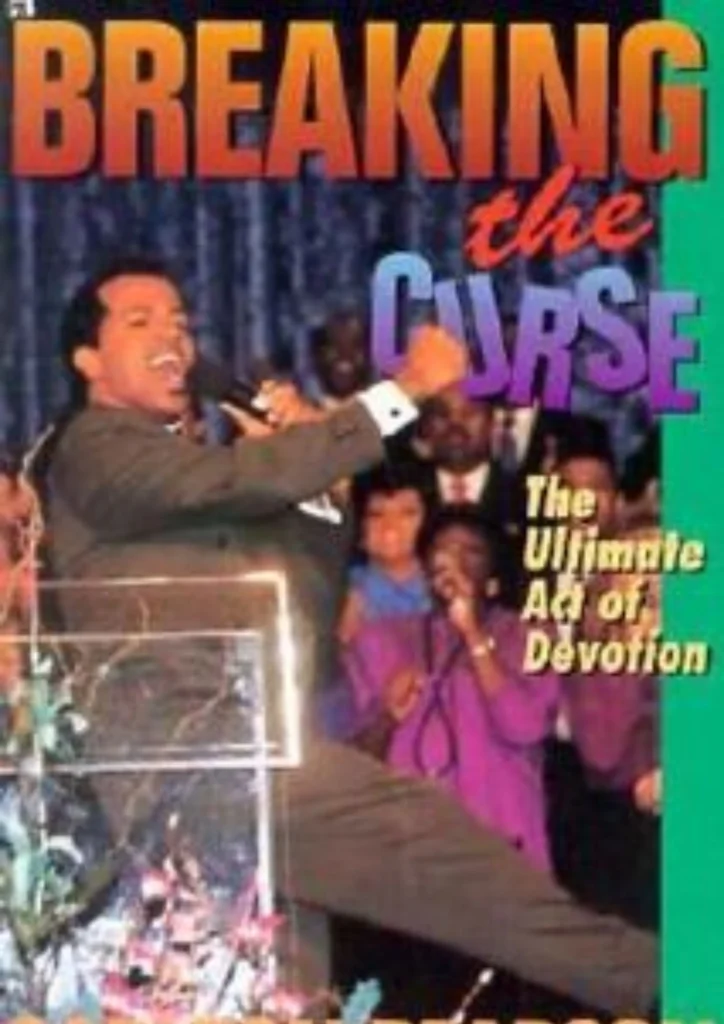
Breaking the Curse
- Author: Carlton D. Pearson
- Genre: Religion / Spiritual Warfare / Christian Living
- Publisher: Harrison House
- Publication Year: 1992
- Pages: 48 (likely a booklet or mini-book)
- Format: Paperback
- Language: English
- ISBN: 978-0892748914
- Rating: ★★★★☆
Breaking the Curse Video
Breaking the Curse: Publication Overview
Release Date and Publisher Information
Carlton Pearson’s book on spiritual freedom, “Breaking the Curse,” was published in the early-to-middle 1990s. The work was released during a period when didactic material on spiritual warfare, such as generational curses, was a significant and predominant element of the international Charismatic movement. It articulated a key element of Pearson’s traditional, pre-Inclusion ministry, where he was framed as a spiritual authority who possessed the keys to freedom for believers from occult, inherited bondages.
Type: Book on Spiritual Freedom and Theology
This is a pastoral and practical theology book, and more specifically, within the tradition of spiritual deliverance. It is not a theoretical book on abstraction but a practical guide that will help individuals locate and break life-destroying, routine patterns blamed on spiritual causes. It is a book of diagnosis and prescription, offering prayers, renunciations, and acts of faith to achieve spiritual deliverance.
Written by Carlton D. Pearson
It was written by Carlton D. Pearson (1953-2023), the author, who wrote this book from his position as a highly respected and influential bishop within the Charismatic Christian faith. His own ministry at that time was an example of prosperity and “blessed living,” and his writing on the topic of breaking curses carried a huge sense of credibility and authority behind it. He writes not as much as a theologian, but as a shepherd who has seen these principles unfold in the life of his flock. His is an imperative tone of compassion designed to move people out of what he saw was real, tangible spiritual bondage.
The Core Thesis of Breaking the Curse
Unpacking the Central Message of the Book
The general thesis of Breaking the Curse is that while bad family patterns (curses) are a genuine spiritual reality that are passed down through generations, the redemptive work of Jesus on the cross gives every believer complete authority over breaking the curses and living in total liberty. The book’s message is a one-two punch: one, it legitimates the reader’s struggles by giving them a spiritual name and origin, and two, it empowers them with a clean-cut, faith-based solution. The major thesis is that each Christian does not have to repeat the sins or consequences of his or her ancestors; they were given the power to overcome once and forever.
A Summary of the Key Arguments and Chapters
- Part 1: The Diagnosis – Uncovering the Curse. Introduces generational curses through scripture, showing readers how to identify repeated destructive patterns in their families as signs of spiritual bondage.
- Part 2: The Education – Learning How Curses Work. Explores how curses are enacted (through idolatry, immorality, harmful words, etc.) and how they are transmitted through generations in Pearson’s theology.
- Part 3: The Prescription – The Steps to Freedom. Provides practical steps for spiritual freedom: repentance, renunciation, and bold faith declarations to break curses. This section is highly action-oriented and participatory.
A Critical Review of Breaking the Curse
Analysis of the Book’s Proposed Concepts
The concepts of Breaking the Curse are pastorally robust within their setting. The idea of a curse that is passed on from generation to generation offers a strong hypothesis for otherwise unaccountable, irrational suffering, which is strongly comforting. Furthermore, the solution presented in the book provides a sense of empowerment and control. It gives people a structured, positive way of coping with their problems, which can be psychologically helpful.
Yet, any critical examination of the framework must also bring out the negative aspects. The system can result in a sort of spiritual fatalism or superstition in which the cause of every ailment is a supernatural curse as opposed to decisions, psychological factors, or institutional malfunctions. It can instill fear and encourage the tendency to over-spiritualize ailments that have real-world, medical, or therapeutic remedies. Above all, the entire concept is opposite to Pearson’s later universalist theology. The idea that the believer needs to take some steps to get cured of a curse is the opposite of his later message that grace is unconditional, universal, and already accomplished work.
Determining the Target Audience and its Reception
The target audience for the book is Pentecostal and Charismatic Christians who hold the belief that the supernatural spiritual realm operates in and upon the natural world. The book is targeted at those who are struggling with unbroken, negative patterns of living and want a spiritual cause and answer. The reception within this community was highly positive. The book was considered to be an emancipating and basic tool, providing brief solutions and active techniques that brought forth tangible results for the majority of readers. It solidified Pearson’s reputation as an authority with deep spiritual insight.
The Educational Value of Breaking the Curse
Its Use in Modern Theological and Pastoral Studies
For the reader of contemporary theology, this book is a fine illustration of one kind of theodicy—a religious explanation of the evil and suffering problem. It may be read in tandem with other theological systems to discover how other traditions answer adversity. It is also a key text in the understanding of the theological evolution of Carlton D. Pearson, an unambiguous example of the orthodox, dualistic philosophy he held before his turnabout.
In pastoral counseling, the book is a classic example of a “deliverance ministry” mode of ministry. It presents a model for a prescriptive, diagnostic, highly directive type of pastoral counseling that seeks spiritual solutions to both spiritual and psychological problems.
Discussion Questions for Students and Reading Groups
- Spiritual vs. Scientific: How can we differentiate between a supernatural “curse” and genetic or psychological inheritance? Can both exist side by side?
- Personal Responsibility: Does attributing struggles to curses mitigate individual accountability, or does it contextualize problems in a powerful way?
- The Nature of Grace: How do Pearson’s teachings on “breaking curses” fit with doctrines of free and unconditional grace?
- Fear vs. Freedom: Do teachings about curses inadvertently create more fear, even if the stated goal is empowerment and freedom?
Final Summary of Breaking the Curse
Summary of the Main Takeaways
- The Past is Not Your Prison: Family history is not a destiny; believers can escape destructive cycles.
- Awareness is the First Step to Freedom: Identifying harmful patterns in history is vital for breaking them.
- Freedom is an Active Process: Deliverance requires deliberate actions: repentance, renunciation, and speaking faith.
- Christ’s Power is Greater: Jesus’ redemptive work surpasses any generational bondage.
Concluding Thoughts on the Book’s Lasting Impact
The lasting impact of Breaking the Curse is two-fold. Within its own community, it is a powerful and popular paradigm for understanding and overcoming continual life problems, offering hope and a sense of control to many. Within the overall narrative of Carlton D. Pearson’s life, however, its value lies as a dissonant and powerful point of contrast. It is an unbroken relic of his orthodox roots, a clean-cut diagram of a spiritual cosmology based upon struggles, cursings, and conditions. The fact that it exists merely makes his eventual leap into a theology of unqualified grace and universal acceptance the more shocking and marvelous. It is a sheer testament to how far his trajectory would ultimately carry him.